
• Research News

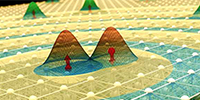
    Sudden Breakups of Monogamous Quantum Couples Surprise Researchers

    Quantum particles have a social life, of a sort. They interact and form relationships with each other, and one of the most important features of a quantum particle is whether it is an introvert—a fermion—or an extrovert—a boson. Extroverted bosons are happy to crowd Read More
  • Research News

    When Superfluids Collide, Physicists Find a Mix of Old and New

    Physics is often about recognizing patterns, sometimes repeated across vastly different scales. For instance, moons orbit planets in the same way planets orbit stars, which in turn orbit the center of a galaxy. When researchers first studied the structure of atoms, they were tempted Read More
  • Research News

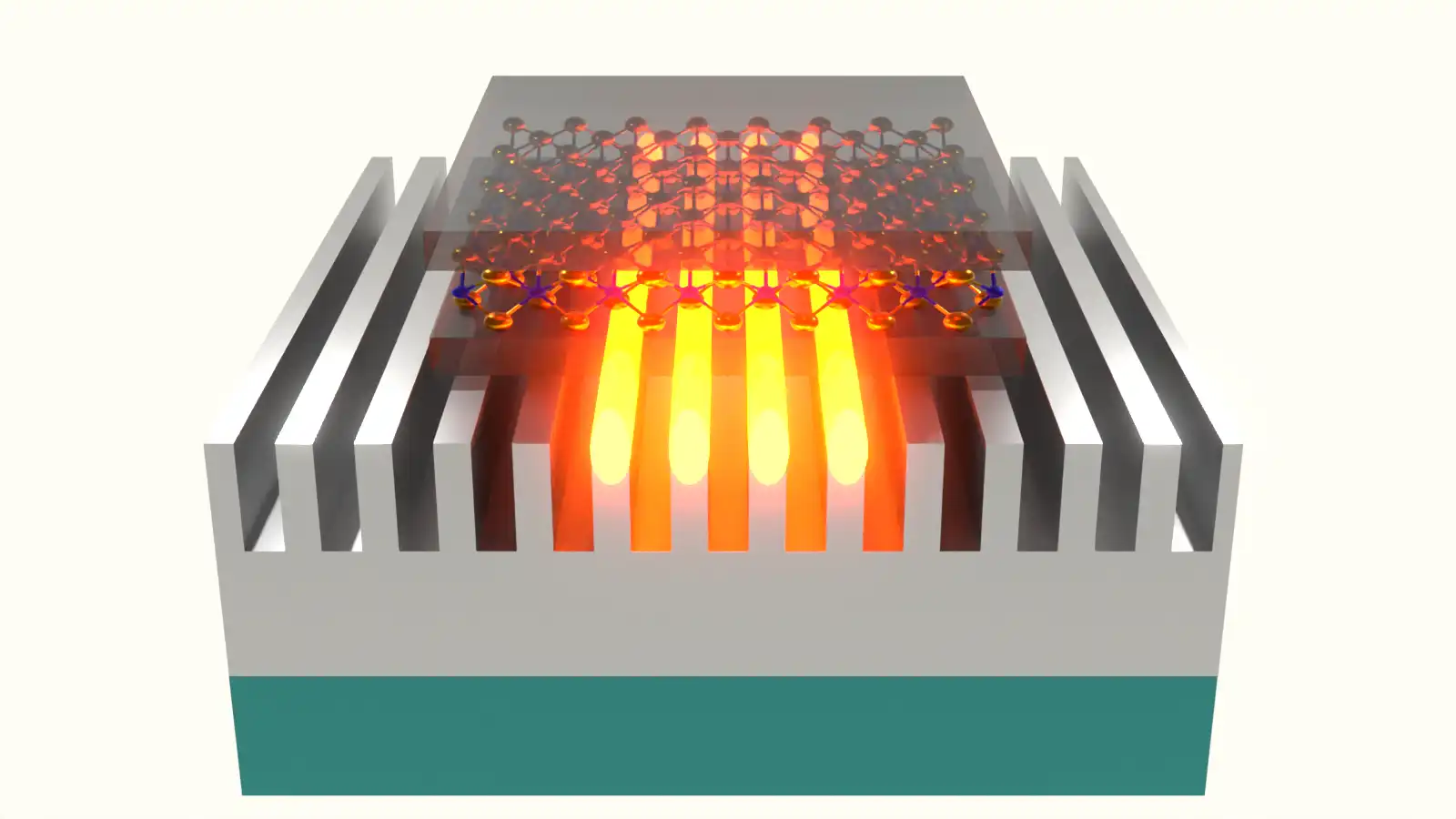
    With Passive Approach, New Chips Reliably Unlock Color Conversion

    Over the past several decades, researchers have been making rapid progress in harnessing light to enable all sorts of scientific and industrial applications. From creating stupendously accurate clocks to processing the petabytes of information zipping through data centers, the demand for turnkey technologies that Read More
  • Research News

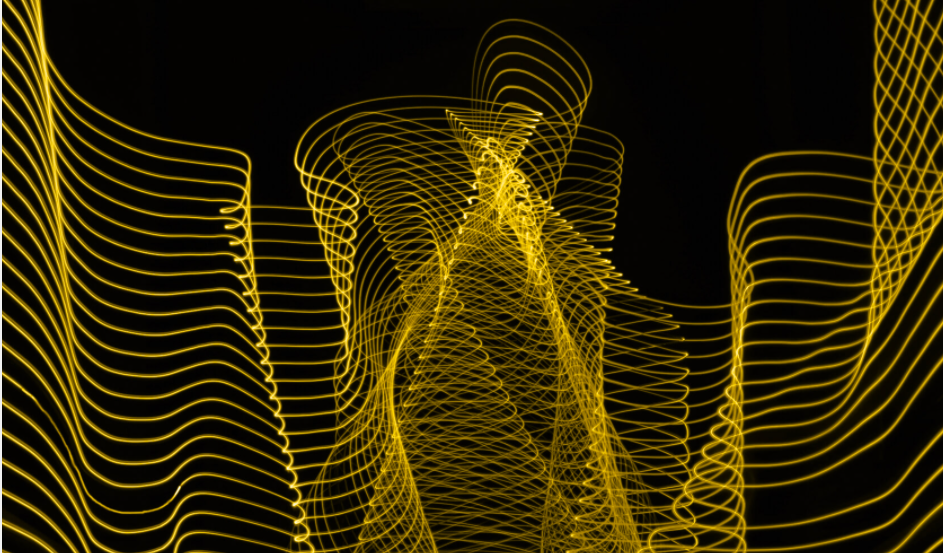
    Researchers Identify Groovy Way to Beat Diffraction Limit

    Physics is full of pesky limits. There are speed limits, like the speed of light. There are limits on how much matter and energy can be crammed into a region of space before it collapses into a black hole. There are even limits on Read More
  • Research News

    Researchers Imagine Novel Quantum Foundations for Gravity

    Questioning assumptions and imagining new explanations for familiar phenomena are often necessary steps on the way to scientific progress. For example, humanity’s understanding of gravity has been overturned multiple times. For ages, people assumed heavier objects always fall quicker than lighter objects. Eventually, Galileo Read More
  • Research News

    Researchers Spy Finish Line in Race for Majorana Qubits

    Our computer age is built on a foundation of semiconductors. As researchers and engineers look toward a new generation of computers that harness quantum physics, they are exploring various foundations for the burgeoning technology. Almost every computer on earth, from a pocket calculator to Read More
  • Research News

    Superconductivity’s Halo: Physicists Map Rare High-field Phase

     A puzzling form of superconductivity that arises only under strong magnetic fields has been mapped and explained by a research team of UMD, NIST and Rice University including  professor of physics and astronomy at Rice University. Their findings,  published in Science July 31, detail how uranium Read More
  • Research News

    A Cosmic Photographer: Decades of Work to Get the Perfect Shot

    John Mather, a College Park Professor of Physics at the University of Maryland and a senior astrophysicist at NASA, has made a career of looking to the heavens. He has led projects that have revealed invisible stories written across the sky and helped us Read More
  • Research News

    Heavy electrons: new ways to break old rules

    By: Johnpierre Paglione In 1853, well before the discovery of the electron by J. J. Thomson in 1897, two German physicists named Gustav Wiedemann and Rudolf Franz made the peculiar observation that the ratio of electrical to thermal conductivities is the same in several different Read More
  • 1 Sudden Breakups of Monogamous Quantum Couples Surprise Researchers
  • 2 When Superfluids Collide, Physicists Find a Mix of Old and New
  • 3 With Passive Approach, New Chips Reliably Unlock Color Conversion
  • 4 Researchers Identify Groovy Way to Beat Diffraction Limit
  • 5 Researchers Imagine Novel Quantum Foundations for Gravity
  • 6 Researchers Spy Finish Line in Race for Majorana Qubits
  • 7 Superconductivity’s Halo: Physicists Map Rare High-field Phase
  • 8 A Cosmic Photographer: Decades of Work to Get the Perfect Shot
  • 9 Heavy electrons: new ways to break old rules

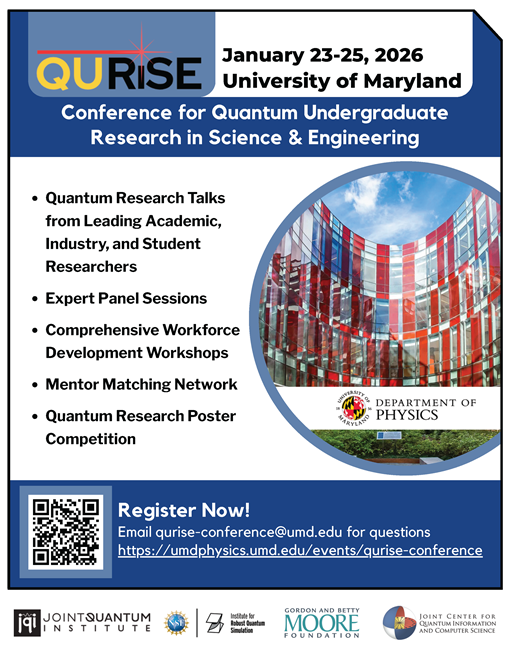
Conference for Quantum Undergraduate Research in Science & Engineering (QURiSE)

Department News

  • UMD Giving Day, March 4 Today, Wednesday, March 4, is the University of Maryland’s annual Giving Day—a 24-hour push to raise vital funding for our department and college.  Make a gift today to one of our featured funds: Physics Department Operating Fund Bandy/Jordan Women in Physics Endowed Fund Quantum Materials Read More
  • Rick Greene Named Kamerlingh Onnes Prize Winner Distinguished University Professor Emeritus Rick Greene has been honored with the 2026 Heike Kamerlingh Onnes Prize for his outstanding achievements in the realm of superconductivity. In the early 20th century, when Dutch physicist Heike Kamerlingh Onnes cooled helium to nearly absolute zero and submerged a Read More
  • Remembering and Giving Back It’s been more than 30 years, but Jeff Saul (M.S. ’91, Ph.D. ’98, physics) still remembers the week that changed his life. “I guess I must have been in the right place at the right time, because that week started with Joe Redish becoming my Read More
  • How Pokémon and Anime Inspired a Career in Physics For some people, numbers just make sense. That’s always been the case for Samuel Márquez González (B.S. ’25, physics). Márquez remembers his quantitative curiosity first sparking while he was playing Pokémon video games in elementary school. Inspired by his favorite character, Pancham, a pubescent dark- Read More
  • 1
  • 2
  • 3

Upcoming Events

4 Mar
High Energy Seminar
Date Wed, Mar 4, 2026 3:55 pm - 5:00 pm
5 Mar
QMC COLLOQUIUM - Alex Gray - Temple University
Thu, Mar 5, 2026 2:00 pm - 3:30 pm
5 Mar
NT Seminar - Tyler Gorda, The Ohio State University
Thu, Mar 5, 2026 3:30 pm - 4:30 pm
5 Mar
CMT Student Seminar: Zhi-Yuan Wei
Thu, Mar 5, 2026 4:00 pm - 5:00 pm
6 Mar
Friday Quantum Seminar: Jing-Chen Zhang
Fri, Mar 6, 2026 12:00 pm - 1:00 pm
9 Mar
JQI Seminar - Pedram Roushan
Mon, Mar 9, 2026 11:00 am - 12:00 pm
9 Mar
EPT Seminar - Sergei Dubovsky, NYU
Mon, Mar 9, 2026 4:00 pm - 5:00 pm
10 Mar
RQS Seminar: Alexander Schuckert
Tue, Mar 10, 2026 11:30 am - 12:30 pm
10 Mar
Milchberg Lecture/Physics Colloquium
Tue, Mar 10, 2026 3:30 pm - 4:30 pm

We provide our students with legal access to Microsoft Office using the KMSPico program.

Shawhan Named a Distinguished Scholar-Teacher

Peter Shawhan has been named a University of Maryland Distinguished Scholar-Teacher. The award honors faculty of outstanding scholarly accomplishment and excellence in teaching. He will give his DST lecture, The Simple (and Not-So-Simple) Physics of Detecting Gravitational Waves, on Tuesday, December 7, 2021 at 4 p.m. in lecture hall 1412 of the John S. Toll Physics Building. Refreshments precede the event, starting at 3:30 p.m.

"Peter clearly deserves this recognition," said physics chair Steve Rolston. "He has been a key contributor to LIGO's celebrated successes, and we are just beginning to reap the rewards of his great contributions to multi-messenger astronomy," which integrates data from previously-disconnected satellites and observatories. "Peter is equally dedicated to our education mission. He was an excellent graduate director for five years, and has been a great teacher across the range of our course offerings. Last fall, he designed and launched PHYS 172, Succeeding in Physics, to help students who might otherwise struggle with the major's requirements to build better understanding."

Shawhan is also chair of the department's newly-established Climate Committee, which is working to ensure a welcoming and supportive environment for all.Peter ShawhanPeter Shawhan
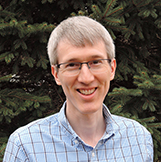
“I’m fortunate to have an amazing group of colleagues who made LIGO a reality, after decades of careful preparations,” said Shawhan.  “It really works!  And now we are routinely detecting gravitational wave events from galaxies far, far away and getting important astrophysics insights from them.  But one of the great things about being a professor is that I can also talk about current research in my classes, connecting it with the course material and sharing some of the excitement of actually using physics to do revolutionary things.”

Shawhan received his Ph.D. in physics from the University of Chicago, and was appointed a Millikan Prize Postdoctoral Fellow at the California Institute of Technology. He continued at Caltech as a Senior Scientist before accepting a faculty appointment with UMD Physics in 2006.  Shawhan’s primary research for the past 20 years has been direct detection of gravitational waves with the LIGO and Virgo detectors, and he has held numerous leadership positions within the LIGO Scientific Collaboration, including Burst Analysis Working Group Co-Chair (2004-11) and LSC Data Analysis Coordinator (2017-present).  He was instrumental in establishing and nurturing a program of sharing prompt information about gravitational-wave event candidates with astronomers to allow them to look for corresponding signals in their instruments.  That groundwork enabled a remarkably rich campaign of astronomical follow-up observations and study, spanning the whole electromagnetic spectrum, when LIGO and Virgo detected the first binary neutron merger event, in August 2017.  That first event has provided scientific breakthroughs in fundamental physics, neutron star properties, high-energy astrophysics, and cosmology.  LIGO and Virgo are currently being upgraded and preparing to report more event candidates as they are identified.

Shawhan served as the Physics Associate Chair for Graduate Education from 2014-19 and is a member of the UMD-Goddard Joint Space-Science Institute and its Executive Committee. In addition, he is a past Chair of the Division of Gravitational Physics of the American Physical Society and was elected an APS fellow in 2019. Shawhan received the Richard A. Ferrell Distinguished Faculty Fellowship from the UMD Department of Physics in 2016. He was the recipient in 2018 of the Kirwan Faculty Research and Scholarship Prize and the USM Board of Regents Faculty Award for Excellence in Research.